
Care Isn’t One-to-One And Neither Is Ritten
Behavioral health rarely happens in isolation. Ritten makes it easy to manage every relationship, role, and release so the right people get the right information, every time.
Parents, guardians, primary care providers, parole officers, and schools can all play a part in care and each one brings their own set of permissions, signatures, and communication needs. Traditional EMRs weren’t built for that complexity. Ritten was.
Relationships, Simplified

See the Whole Picture of Care
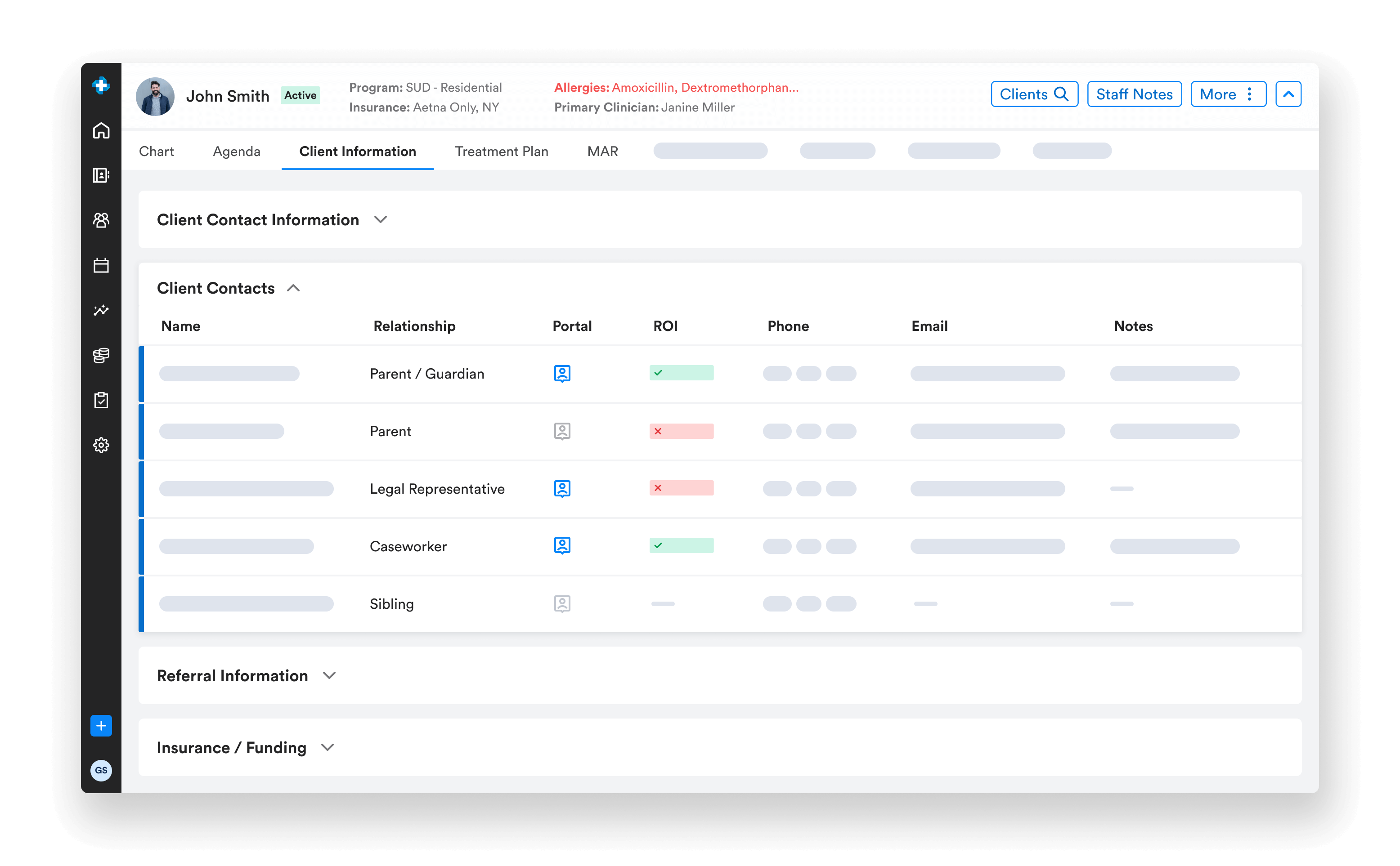
Ritten lets you map every meaningful relationship directly in the client chart. Each contact—whether a guardian, parent, or outside provider—is visible, linked, and managed from one place.

Always Send the Right Forms to the Right People
You choose exactly who receives which forms. Need a parental consent form for a minor? Or a treatment progress update for a probation officer? Ritten makes it effortless and error-proof.

Simplify Multi-Client Families
Create a single contact (like a parent) and associate it with multiple client charts. Update Mom’s phone number once—it updates everywhere automatically.

Stay Compliant Without the Chaos
Track every Release of Information (ROI) per client-contact relationship, including dates, document type, and consent level. Ritten ensures only authorized parties can view or sign forms.
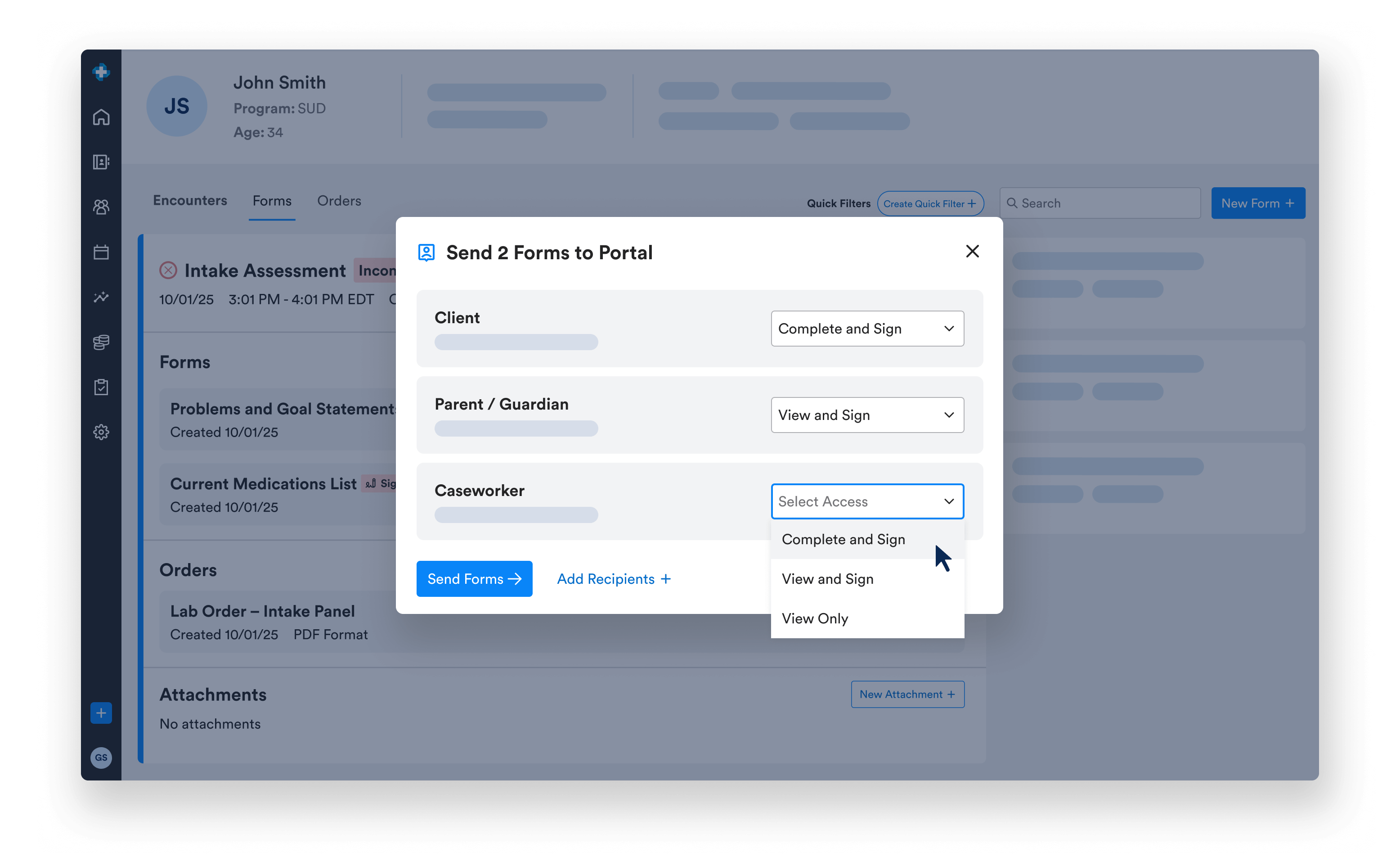
Ritten makes managing complex client relationships simple.
- Model Relationships: Add parents, guardians, or external contacts to client charts
- Set Permissions: Control roles, age rules, and required signatures
- Automate ROI Tracking: Keep releases updated automatically when forms are shared
- Streamline Communication: Share only what’s relevant, avoiding errors and extra paperwork
It’s not just better recordkeeping—it’s clearer, more connected care.

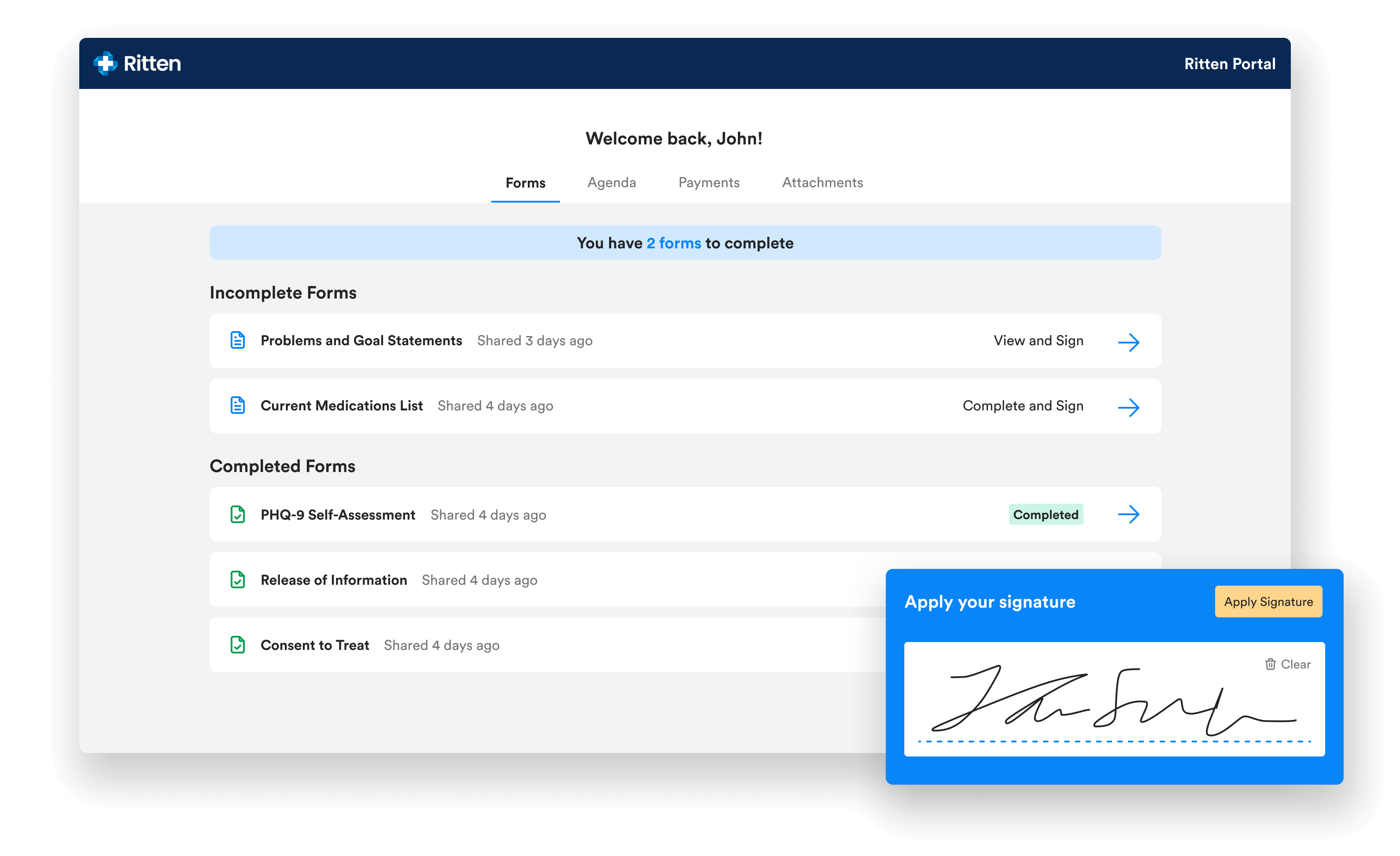
Designed to keep everyone in the loop.
- Supports any contact type: guardians, family members, providers, case managers, and more
- One contact can connect to multiple client charts
- Guardian age and signature rules configurable by state
- Flexible form-sharing permissions by role and ROI
- Integrates with documentation, billing, and scheduling workflows
Frequently Asked Questions
Still have questions about our behavioral health software? Email us at hello@ritten.io
Ritten’s structured documentation and centralized patient record help teams record who was involved, what was discussed, and what was consented to. This supports staffing meetings, supervision, utilization review, and handoffs by keeping key information in the record rather than in disconnected emails or spreadsheets.
Yes. Ritten supports encounter-based documentation for individual and family sessions. Programs can configure templates for family therapy, collateral sessions, and care coordination encounters so documentation aligns with the organization’s clinical model and compliance requirements.
During implementation, Ritten teams work with customers to configure forms, roles, and permissions to align with organizational policies and regulatory requirements. This includes configuring who can view and document certain information, required consent workflows, and reporting needs.
Ritten supports forms and electronic signature workflows that can be configured for consents and acknowledgements, including guardian-related workflows where appropriate. Organizations define which consents are required, how they are captured, and who is authorized to sign.
Ritten supports structured capture of contacts and relationships (for example, family members, guardians, and collateral providers). Teams can document communication, consent, and involvement in a consistent way, helping reduce ambiguity and supporting continuity across admissions, clinical, and care coordination workflows.
Ritten supports role-based permissions, audit trails, and restricted-chart workflows (such as sequestered charts) so organizations can limit access to sensitive information. These controls help behavioral health programs align documentation access with clinical safety considerations and confidentiality requirements.
In behavioral health, complex family dynamics can include multiple involved parties (parents/guardians, partners, caregivers), differing consent requirements, safety concerns, and competing communication preferences. Documentation and access controls are critical to ensure confidentiality and clarity across the care team.

Responsible by Design
Ritten enforces HIPAA and 42 CFR Part 2 standards automatically. Every communication and signature is tied to explicit consent and tracked at the relationship level for full transparency and audit readiness.