
Meet the Encounter:
The new standard for behavioral health EMR’s
Most EMRs force providers into rigid templates. Ritten does the opposite. Our Encounter system brings every part of a session -- clients, clinicians, forms, goals, billing, and notes -- into one seamless experience.
It’s documentation that feels natural and works the way you think, making each step of care easier to complete and easier to understand.
Once you use it, you won’t believe it was ever done any other way.
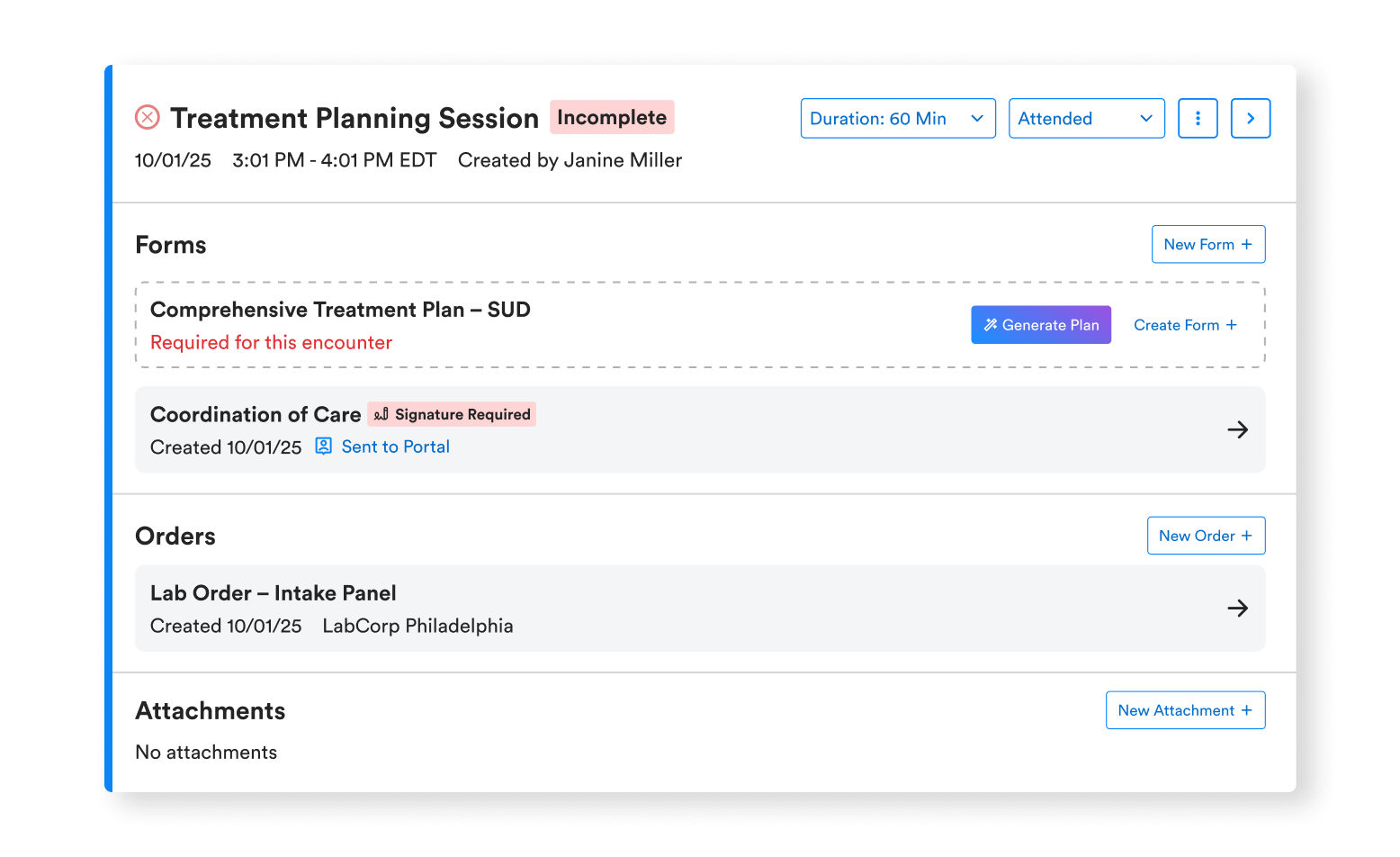
How Encounters Transform Documentation

Do Notes in Minutes, Not Hours
Your session starts and so does your Encounter. Ritten automatically pulls in client details, treatment goals, and required fields, letting you complete documentation on the spot.

Your Workflow,Your Way
SOAP, DAP, BIRP, or a custom flow unique to your clinic Ritten adapts instantly to your preferred method. No extra clicks, no confusing menus, no retraining required.

Everything Connected
Every Encounter links automatically to scheduling, billing, and reporting so a single action updates your entire workflow.

Always Compliant, Always Clear
Because Encounters follow your clinic’s rules, every note meets payer and state requirements before it’s even submitted.
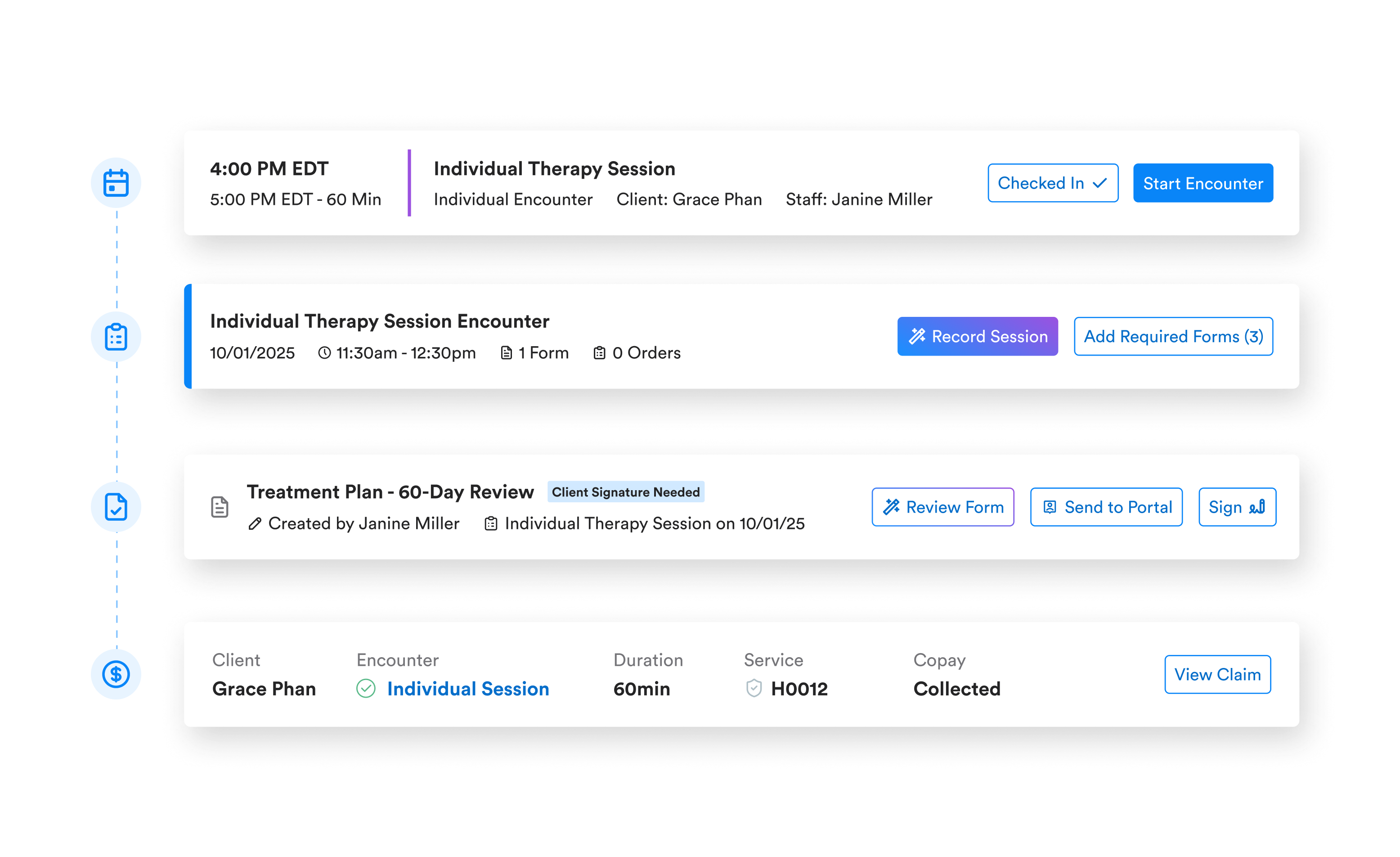
No separate modules. No copying between systems. Just one smooth, intelligent flow from care to claim.
- Start an Encounter from your session or calendar.
- Ritten automatically loads client info, goals, and the right form template.
- Fill in or dictate your note smart prompts guide you through required fields.
- When you’re done, everything syncs instantly with billing, reports, and analytics.
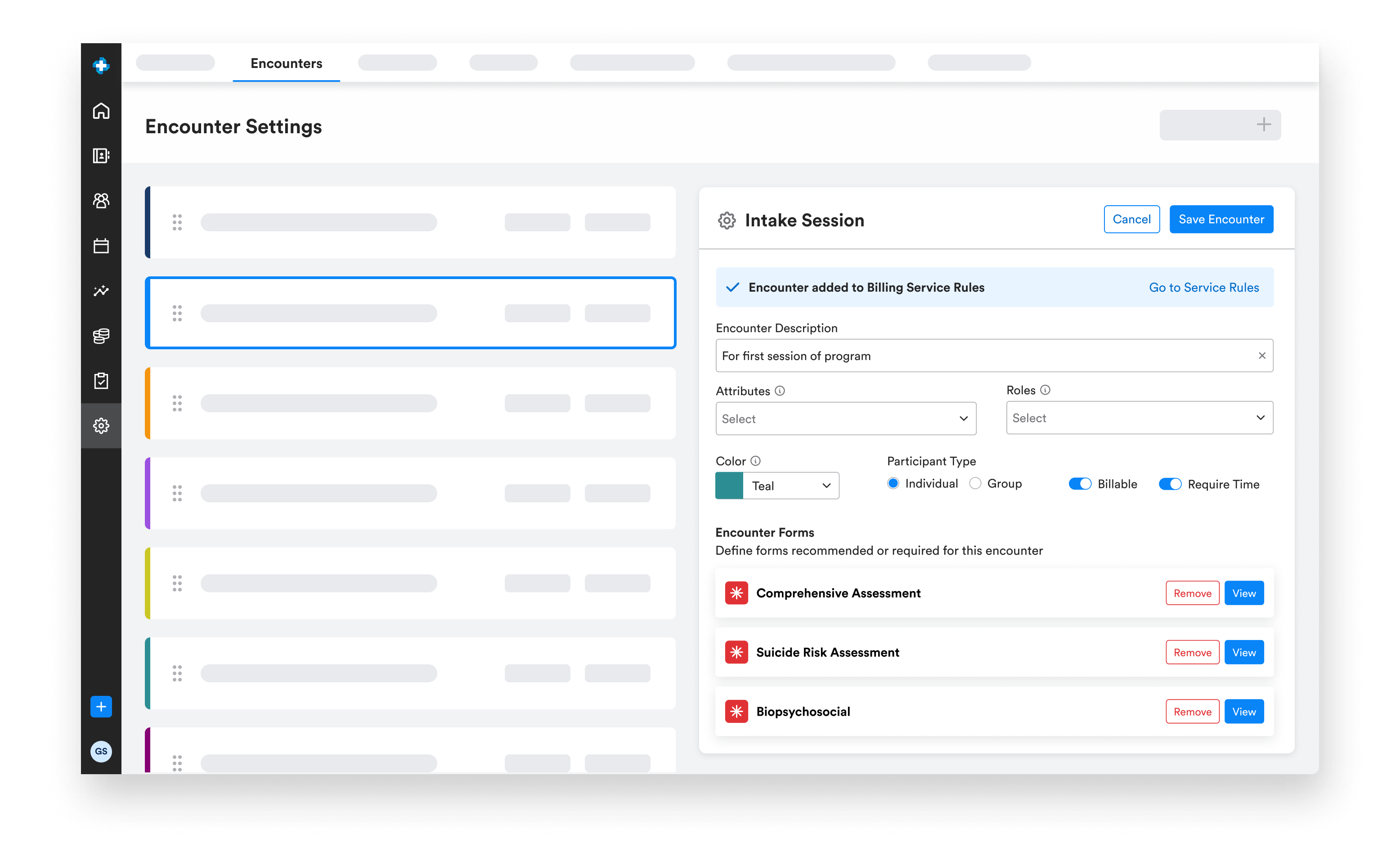
Traditional EMRs treat forms, sessions, and billing as disconnected tasks.
- Ritten combines them into one intuitive process.
- That means fewer errors, faster reimbursement, and a more natural experience for every clinician.
- It’s not just easier, it's better designed.

Designed to keep your entire care team connected.
- Supports SOAP, DAP, BIRP, narrative, and custom templates
- Tracks progress across clients and programs through linked Encounters
- Keeps every clinician, supervisor, and biller in sync
- Works seamlessly with Ritten’s scheduling, billing, and analytics tools
Frequently Asked Questions
Still have questions about our behavioral health software? Email us at hello@ritten.io
Yes. Higher levels of care often require recurring documentation such as checks/rounds, incident reports, and other operational forms. Ritten can support these workflows as structured encounters/forms so they are tied to the patient record and available for reporting and audit.
Yes. Ritten supports compliance-oriented workflow controls. Organizations can implement soft stops (warnings) and hard stops (requirements) so key fields, signatures, and required documentation are completed before a workflow proceeds—for example, before an encounter is finalized or before billing actions occur.
Forms can be customized. If you need to update a form later, we can talk through what’s possible and the simplest way to handle changes while keeping prior records intact.
Yes. Ritten supports configurable forms so organizations can build custom assessments and templates that match their clinical model, payer requirements, and accreditation standards. Templates can include structured fields, narrative sections, required questions, and workflow rules.
Ritten can support multiple programs with different encounter types and forms. During setup, we’ll confirm what should be standardized versus program-specific, and how reporting should work.
Many behavioral health organizations configure common standardized assessments in Ritten (for example, depression, anxiety, suicide risk, substance use, and functioning measures). Ritten’s form builder makes it possible to implement standardized tools as well as organization-specific instruments.
Ritten supports electronic signature workflows, which can be used for clinical signatures and, where appropriate, patient/guardian signatures for consents and acknowledgements. This helps behavioral health organizations reduce paper handling and improve documentation timeliness.
Because forms in Ritten capture structured data, organizations can report across form fields for internal dashboards, payer reporting, quality measures, and operational oversight. Many teams use this for outcomes reporting, compliance reporting, utilization review, and program performance reporting.
Ritten is designed to link documentation to billing. Encounter structures and required fields can drive billing rule checks, help identify missing documentation before claims are created, and support clean claims workflows that reduce denials and rework.
In Ritten, forms are the structured templates used to capture clinical and operational data (assessments, progress notes, consents, treatment plans, nursing workflows, etc.). Encounters are the events or visits where services occur. Linking forms to encounter types helps standardize documentation, reporting, and billing.

Responsible by Design
Ritten Encounters are fully HIPAA-compliant, provider-controlled, and transparent.
No drafts are submitted automatically, and audit logs track every edit for accountability and trust.