
One system.
From first call to discharge.
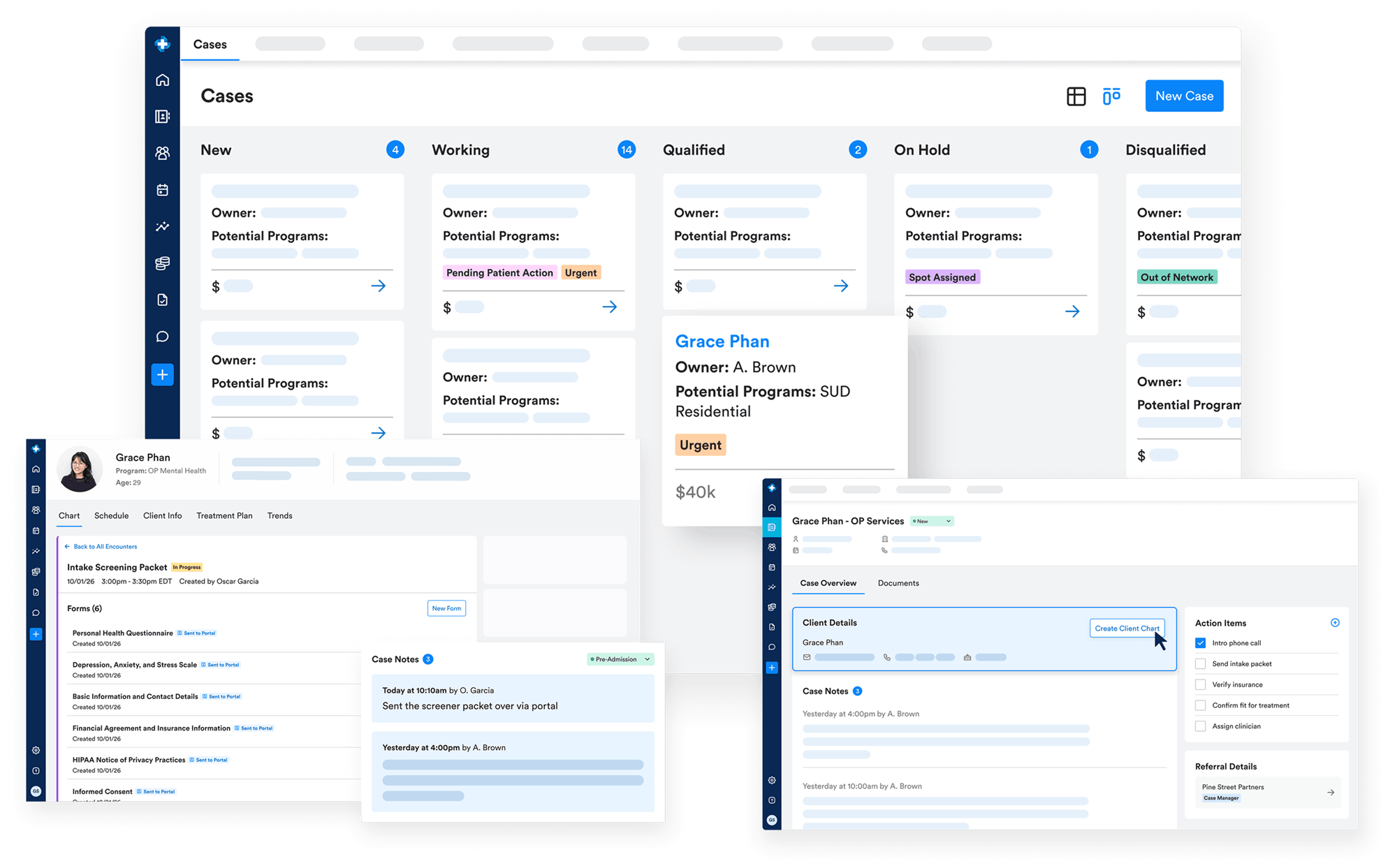
Ritten's CRM is built for behavioral health admissions. Track every inquiry, every referral, and every organization in the same platform that runs your charts so the data captured on day one is the data your clinical team uses on day thirty.
What is the Ritten CRM?
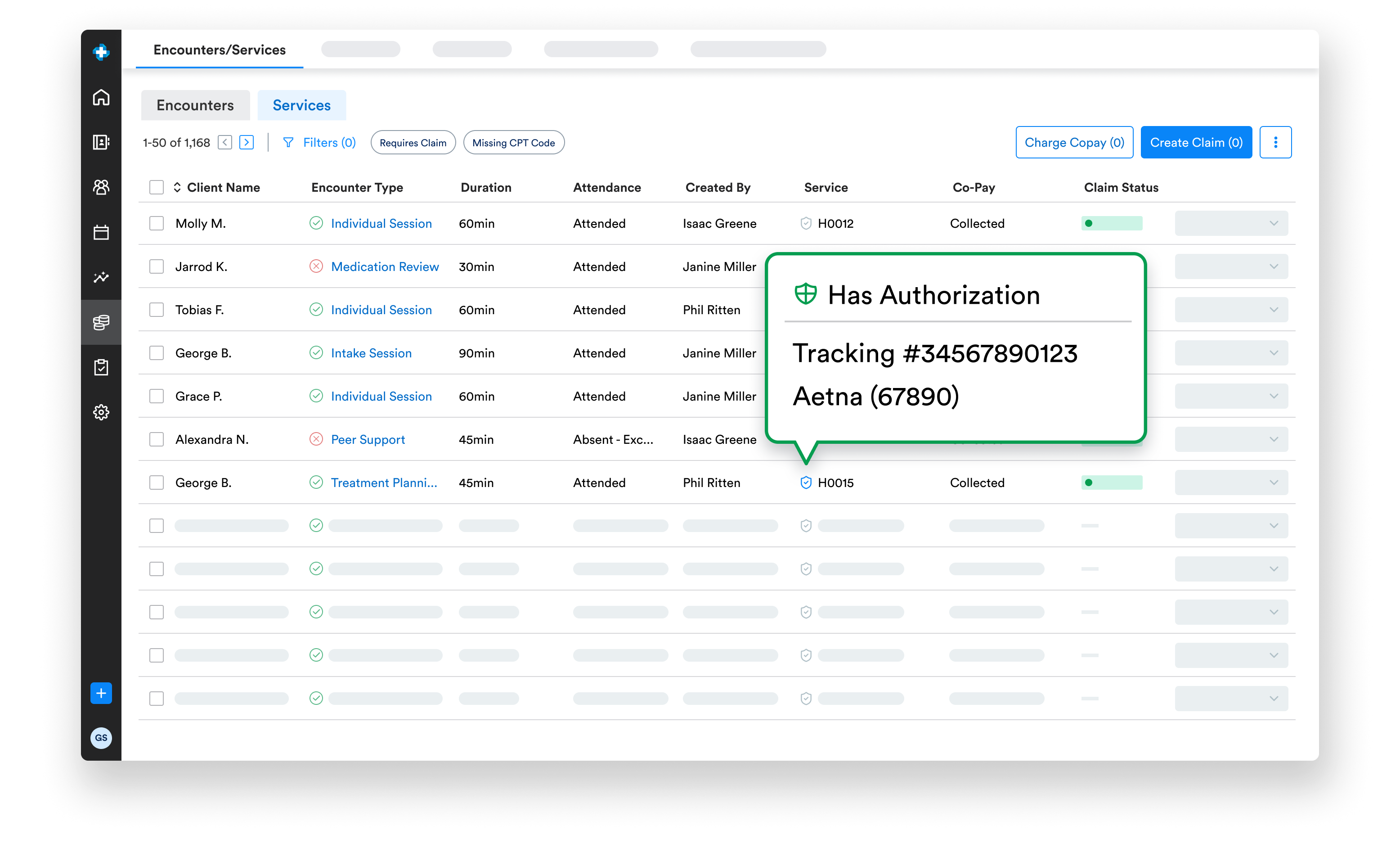
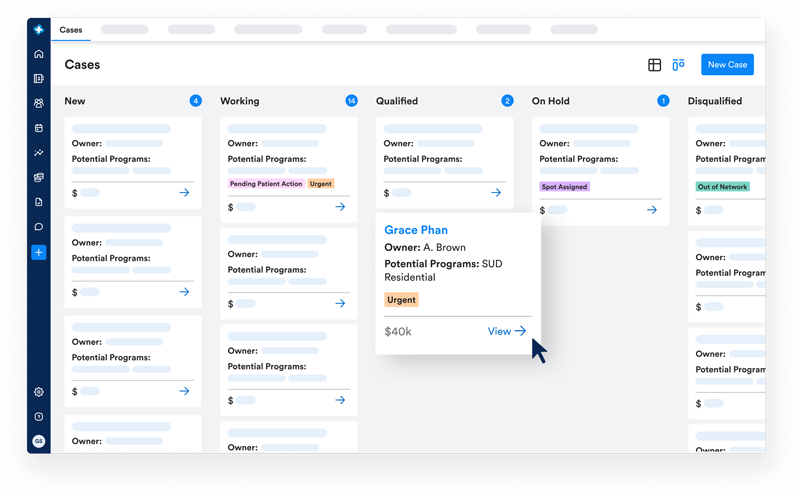
The Ritten CRM is the admissions module of the Ritten platform. It replaces spreadsheets, generic sales tools, and disconnected intake forms with a purpose-built workflow for behavioral health: cases that move through your admissions pipeline, referral organizations and contacts that stay tied to the clients they send, and a public lead application that captures new inquiries directly into your CRM.
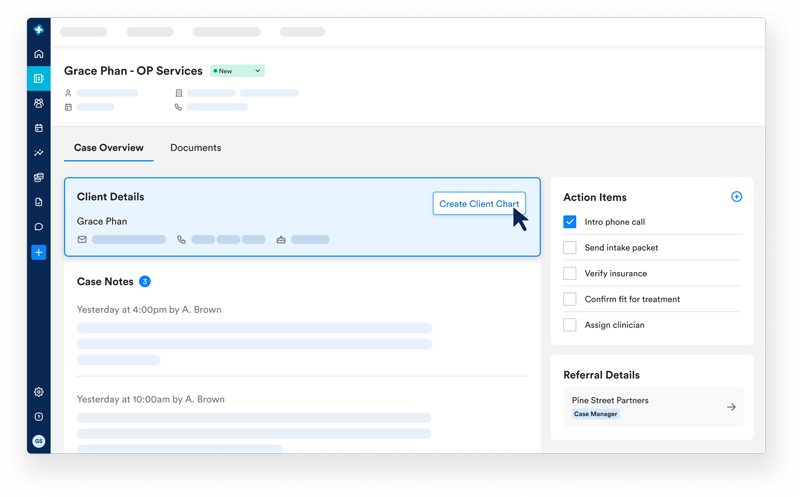
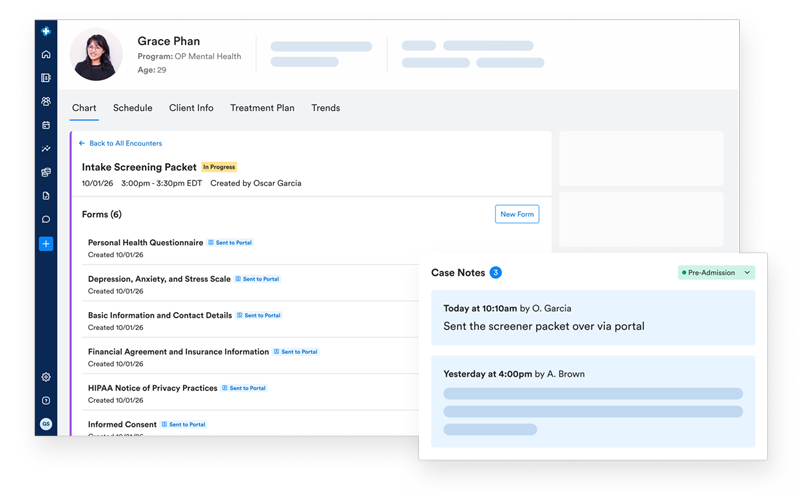
Because the CRM lives inside Ritten, when an admissions coordinator qualifies a case, the data they collected including insurance card images, demographics, referral source and client's associated organizations all flow directly into the client chart when the case is admitted. No re-entry. No reconciliation.

What is the Ritten CRM?
Most behavioral health programs cobble admissions together: a marketing form here, a Google Sheet there, an EMR that knows nothing about the work that happened before the chart was created. Ritten brings the entire admissions journey into one connected workflow.
What's inside the CRM?
Most behavioral health programs cobble admissions together: a marketing form here, a Google Sheet there, an EMR that knows nothing about the work that happened before the chart was created. Ritten brings the entire admissions journey into one connected workflow.
What Makes Ritten's CRM Different?
Ritten's CRM isn't a generic sales CRM bolted onto an EMR. It's built around how behavioral health programs actually take in clients.
Built for the way you actually admit clients

Frequently Asked Questions
Still have questions about our behavioral health software? Email us at hello@ritten.io
Yes. Ritten's Lead Application is a public form you can configure in CRM settings and either embed on your website or share by link. Submissions create new cases in your CRM with the submitted information attached, including insurance card images.
Ritten integrates with Call Tracking Metrics (CTM) so inbound and outbound admissions calls flow into the CRM with AI-generated call summaries. The CTM integration is available to customers with the CRM included on their contract.
Each case can be connected to a referring organization and a referral point of contact. From an organization's page, you can see all clients that organization has sent. From a contact's page, you can see the contact's relationships to other people and organizations.
No. The CRM is part of the Ritten platform. Admissions, charting, and billing all run on the same data and the same client, the same insurance record, the same referring organization.

See how your admissions team would work in Ritten.
Email hello@ritten.io to schedule a walkthrough.