
Know which referral partners send you clients.
Referral relationships drive most behavioral health admissions. Ritten gives you one place to manage the organizations and people who refer to you, and see which ones actually send clients who admit.
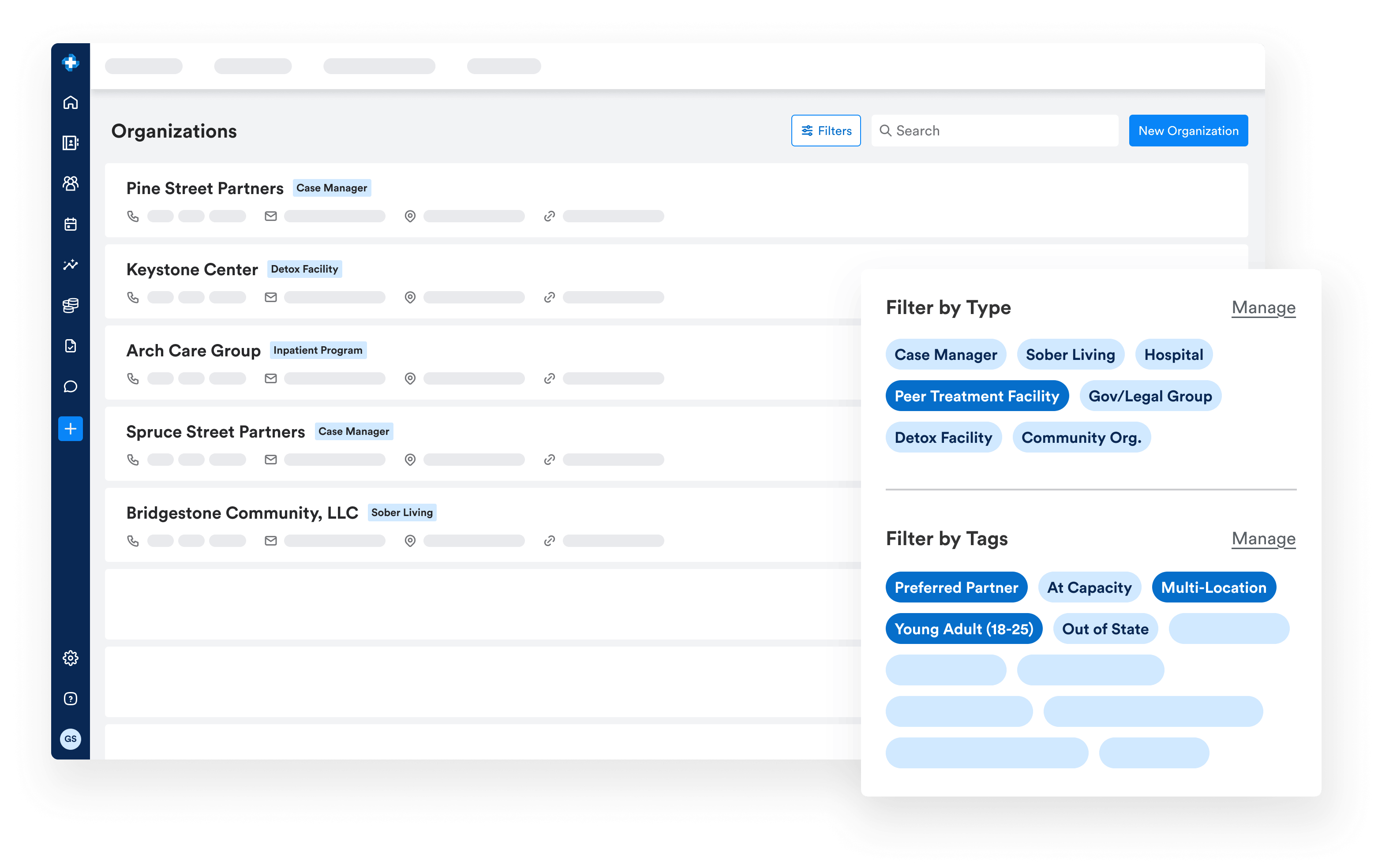
Organizations, contacts, and the relationships between them
Organizations and individual contacts live in one shared system. Cases, ROIs, and client charts all reference the same records, so a change to a contact or organization updates everywhere.


Organization types and tags
Classify organizations first by type, then by the tags that fit your workflow.
ROIs at the contact or organization level
Releases of Information can apply to a single contact or an entire organization, matching how clients actually sign releases.

See referred clients from the organization page
Open any organization to see its members and the clients associated with it. The same view shows up on contacts open a referring provider to see their connections to clients and other contacts.
Frequently Asked Questions
Still have questions about our behavioral health software? Email us at hello@ritten.io
Yes. ROIs can be applied at the organization level, covering every member without naming each individually. ROIs can also be revoked when needed.
Yes. Relationship Owner is a field on both contacts and organizations, and the owner can be internal or external — useful when a facility has a regular outside point of contact.
Yes. Organization Tags are configurable. "Accepting New Clients" is a common example, but you can define any tags that fit your workflow — including ones that let you track referral volume across institution types.
The Merge Contacts tool consolidates duplicate non-client contacts while preserving all their relationships.

Turn your Encounters into clean claims automatically
Show us how you bill today. We’ll show you how Claimification can reduce manual touches and speed up reimbursement.